Imagine vibrant bursts of red cascading from a hanging basket, a miniature tomato vineyard right outside your door. Growing cherry tomatoes in a hanging basket isn't just a charming aesthetic choice; it's a surprisingly practical way to enjoy fresh, homegrown goodness, even if you're short on space. It's easier than you might think, and the rewards are delicious! Growing Cherry Tomatoes in Hanging Baskets: A Complete Guide Growing cherry tomatoes in hanging baskets offers a delightful way to bring fresh produce to even the smallest spaces. Whether you have a sprawling garden or a tiny balcony, the vibrant foliage and sweet, juicy fruits of cherry tomatoes add beauty and flavor to your surroundings. This guide will walk you through every step, from choosing the right basket to harvesting your bountiful crop. Consider these tips your keys to unlocking a cascade of delicious cherry tomatoes right at your fingertips! Why Choose Hanging Baskets fo...
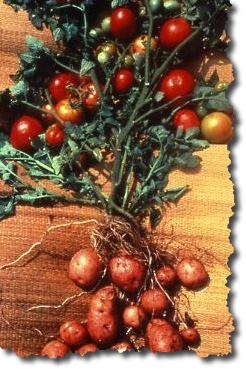
Imagine harvesting both plump, juicy tomatoesandfresh, earthy potatoes from a single plant! It sounds like something out of a science fiction novel, but thanks to the wonders of grafting, the "Pomato" plant – also known as a "Tomato Potato Plant" – is very real and within reach of the home gardener. But before you rush out to buy Pomato plant seeds, let's delve into the fascinating world of this horticultural hybrid and understand exactly what you're getting (or not getting!) when you explore the possibility of growing one yourself.
Understanding the Pomato Plant: Not From Pomato Plant Seeds
The first, and perhaps most crucial, thing to understand is that you can't grow a Pomato plant from Pomato plant seeds. Let's clarify this right away because it's the biggest misconception surrounding these intriguing plants. The Pomato isn't a genetically engineered organism grown from specialized Pomato plant seeds, nor is it a true hybrid created through cross-pollination. Instead, it's agrafted plant, combining two distinct species:a tomato plant and a potato plant. Grafting is a horticultural technique where parts of two plants are joined together so they grow as one.
The Science Behind Grafting Pomato Plants
Grafting works because both tomatoes and potatoes belong to the same plant family, Solanaceae (also known as the nightshade family). This close relation allows the tissues of the two plants to fuse, allowing them to share vascular systems. The process involves cutting the stem of one plant (the scion, in this case, typically a tomato plant) and attaching it to the root system of another plant (the rootstock, typically a potato plant). If the graft is successful, the scion will grow and produce its characteristic fruit (tomatoes), while the rootstock will develop its underground tubers (potatoes).
Think of it like this: you are creating a plant that uses the strong roots of the potato plant to feed the tomato plant. The potato plant provides the water and nutrients that the tomato plant needs to grow its delicious tomatoes.
Why You Can't Grow a Pomato from Pomato Plant Seeds
Now, because the Pomato is a grafted plant and not a true hybrid, the seeds produced by the tomato portion will only grow into tomato plants. They won't carry the genetic information for producing potatoes. The potato portion of the plant reproduces vegetatively through its tubers. Therefore, you cannot get 'Pomato plant seeds', and you need to understand that the production of a Pomato plant is entirely dependent on a complex procedure of grafting. To further clarify this, let’s think about fruit trees. When growing apple trees, you might graft different varieties onto a single rootstock to get multiple kinds of apples from one tree. Similarly, the Pomato leverages grafting to yield two different crops.
Here are some key reasons why you won’t find true Pomato plant seeds:
- Grafting is a physical union, not a genetic one.
- Seeds inherit traits from pollination and fertilization, processes that don’t involve the grafting process.
- The genetic makeup of tomato seeds remains unchanged by being grown on a grafted plant.
Exploring the Benefits of Growing a Pomato Plant
Despite the fact that you can't get Pomato plant seeds, growing a Pomato plant has some advantages. For gardeners with limited space, the Pomato offers the unique benefit of harvesting two crops from a single planting location. This can be especially valuable in urban gardens or small patios.
Consider these benefits:
- Space Saving: Ideal for small gardens, balconies, or patios.
- Novelty: A conversation starter and a fun gardening project.
- Dual Harvest: Get both tomatoes and potatoes from one plant.
However, it's important to manage your expectations. The yield of both tomatoes and potatoes from a Pomato plant might not be as high as if you were growing each plant separately. The energy of the plant is divided between producing fruit above ground and tubers below ground. Furthermore, the success of a Pomato plant heavily depends on the grafting technique and the compatibility of the chosen tomato and potato varieties.
Creating Your Own Pomato Plant: The Grafting Process
While you can purchase already-grafted Pomato plants, the more adventurous gardener might want to try their hand at grafting their own. This requires patience, precision, and a good understanding of the grafting process.
Steps for Grafting a Tomato and Potato Plant
- Choose Your Plants: Select healthy, disease-free tomato and potato plants of similar stem thickness. Look for tomato varieties known for good fruit production and potato varieties known for good tuber production. Popular choices for tomatoes include cherry tomatoes or Roma tomatoes, and for potatoes, consider varieties like Yukon Gold or Russet.
- Prepare Your Tools: You'll need a sharp, sterile grafting knife, grafting tape or clips, and a clean workspace. Sterilizing your tools is critical to prevent infections.
- Make the Cuts: The most common grafting method for Pomato plants is the cleft graft. Make a V-shaped cut into the stem of the potato plant (the rootstock). Then, make a wedge-shaped cut at the base of the tomato plant stem (the scion) that matches the V-cut in the potato plant.
- Join the Plants: Carefully insert the wedge of the tomato plant into the V-cut of the potato plant. Ensure the cambium layers (the green layer just beneath the bark) of both plants are in contact. This is crucial for successful fusion.
- Secure the Graft: Use grafting tape or clips to tightly secure the joint. This will hold the plants together and protect the graft from drying out.
- Provide Care: Place the grafted plant in a humid environment, such as a greenhouse or under a plastic dome. Keep the soil consistently moist, but not waterlogged. Protect the plant from direct sunlight for the first few days.
- Monitor and Maintain: Regularly check the graft for signs of success, such as new growth on the tomato plant. Remove any suckers that grow from the potato plant below the graft, as these will divert energy away from the tomato plant.
Grafting success can vary. Don't be discouraged if your first attempt isn't successful. Practice makes perfect!
Choosing the Right Tomato and Potato Varieties for Grafting
The success of your Pomato plant depends largely on the compatibility of the tomato and potato varieties you choose for grafting. Look for varieties that are:
- Vigorous Growers: Choose plants known for their strong growth habits.
- Disease Resistant: Select varieties that are resistant to common tomato and potato diseases.
- Compatible Stem Sizes: The stems of both plants should be of similar diameter for easier grafting.
- Similar Growing Requirements: Choose tomato and potato varieties that thrive in similar soil conditions and climates.
Some successful combinations reported by gardeners include:
- Cherry tomatoes grafted onto Yukon Gold potatoes
- Roma tomatoes grafted onto Russet potatoes
- Early Girl tomatoes grafted onto White potatoes
Troubleshooting Common Pomato Grafting Problems
Grafting isn't always a smooth process. Here are some common problems you might encounter and how to address them:
- Graft Failure: If the graft doesn't take, the tomato plant will wilt and die. This can be due to improper cuts, poor cambium contact, or infection. Try again with fresh cuts and sterilized tools.
- Sucker Growth: Potato plants can produce suckers (shoots) from below the graft. These should be removed regularly to ensure the tomato plant receives enough nutrients.
- Disease: Monitor the plant for signs of disease, such as leaf spots or wilting. Treat promptly with appropriate fungicides or insecticides.
- Poor Yield: The yield of both tomatoes and potatoes might be lower than if you were growing each plant separately. This can be due to insufficient nutrients, inadequate sunlight, or incompatible varieties. Experiment with different varieties and growing conditions to optimize yield.
Caring for Your Pomato Plant After Grafting
Once your graft has taken and your Pomato plant is growing strongly, it's important to provide the right care to ensure a bountiful harvest.
Essential Care Tips for Pomato Plants
- Sunlight: Pomato plants need at least 6-8 hours of sunlight per day.
- Soil: Plant in well-drained, fertile soil amended with compost or other organic matter.
- Watering: Water regularly, especially during dry periods. Avoid overwatering, as this can lead to root rot.
- Fertilizing: Fertilize regularly with a balanced fertilizer, following the instructions on the label.
- Support: Provide support for the tomato plant as it grows, using stakes, cages, or trellises.
- Pruning: Prune the tomato plant to remove suckers and promote airflow.
Harvesting Your Tomatoes and Potatoes
Harvest your tomatoes when they are fully ripe and have reached their desired color. Harvest your potatoes when the foliage starts to die back. Gently dig around the base of the plant to unearth the tubers. Don't be surprised if the potato yield is somewhat smaller than you might expect from a dedicated potato plant. Remember, the Pomato is a novelty plant, and while it can produce both tomatoes and potatoes, the yields might not be as high as if you were growing each crop separately.
The Future of Pomato Plants and Grafting Technology
While the Pomato is a fascinating example of grafting technology, it's just the tip of the iceberg. Researchers are constantly exploring new ways to use grafting to improve crop yields, enhance disease resistance, and create novel plant combinations. Grafting is becoming increasingly important in sustainable agriculture, as it can reduce the need for pesticides and fertilizers.
Although you cannot directly purchase 'Pomato plant seeds' to cultivate this extraordinary plant, the potential for innovation in grafting techniques opens up exciting possibilities for the future of home gardening and commercial agriculture. The Pomato serves as a tangible reminder of the ingenuity and creativity that we can bring to the world of plants, allowing us to cultivate not only our gardens but also our understanding of the intricate relationships within the natural world.